
STÆDIUM
Senior Unity Dev
Mobile: Android
~8-10
~1 year
STÆDIUM (Freeletics)
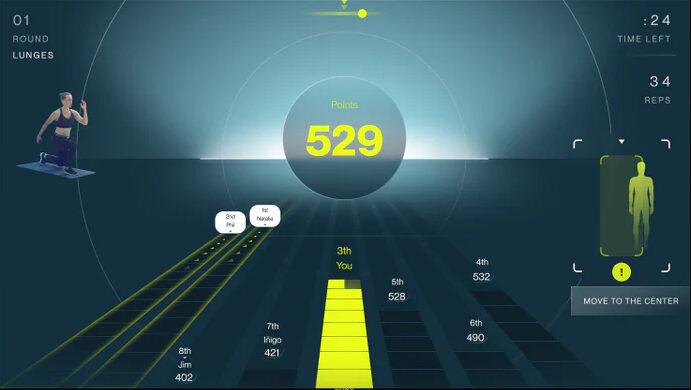
STÆDIUM is a strength-gaming platform by Freeletics that blends real-world movement tracking with interactive gameplay experiences. The platform included multiple game modes such as Dash and Orbitals, where real-time physical movement directly controlled in-game actions.
Overview
I worked in a cross-functional team consisting of Unity developers, UI designers, QA engineers, backend engineers, and a native Android team.
My main responsibility was bridging Unity with the native Android application and translating real-world motion tracking data into responsive gameplay systems.
The project was built as a hybrid application, with Unity embedded directly inside the Freeletics mobile app.
Technical Break Down
Contributions
I was hired as a Senior Unity Developer and took over an existing project that had been previously developed by another senior engineer, leading it through a critical ~6 month development phase.
After this period, Freeletics brought in another Senior Unity Developer, whom I helped onboard into the existing codebase and architecture.
Together, we focused on improving and stabilizing the system architecture by introducing and refining patterns such as the Service Locator Pattern, Observer Pattern, and Finite State Machines (FSM) to better modularize systems and improve scalability across the project.
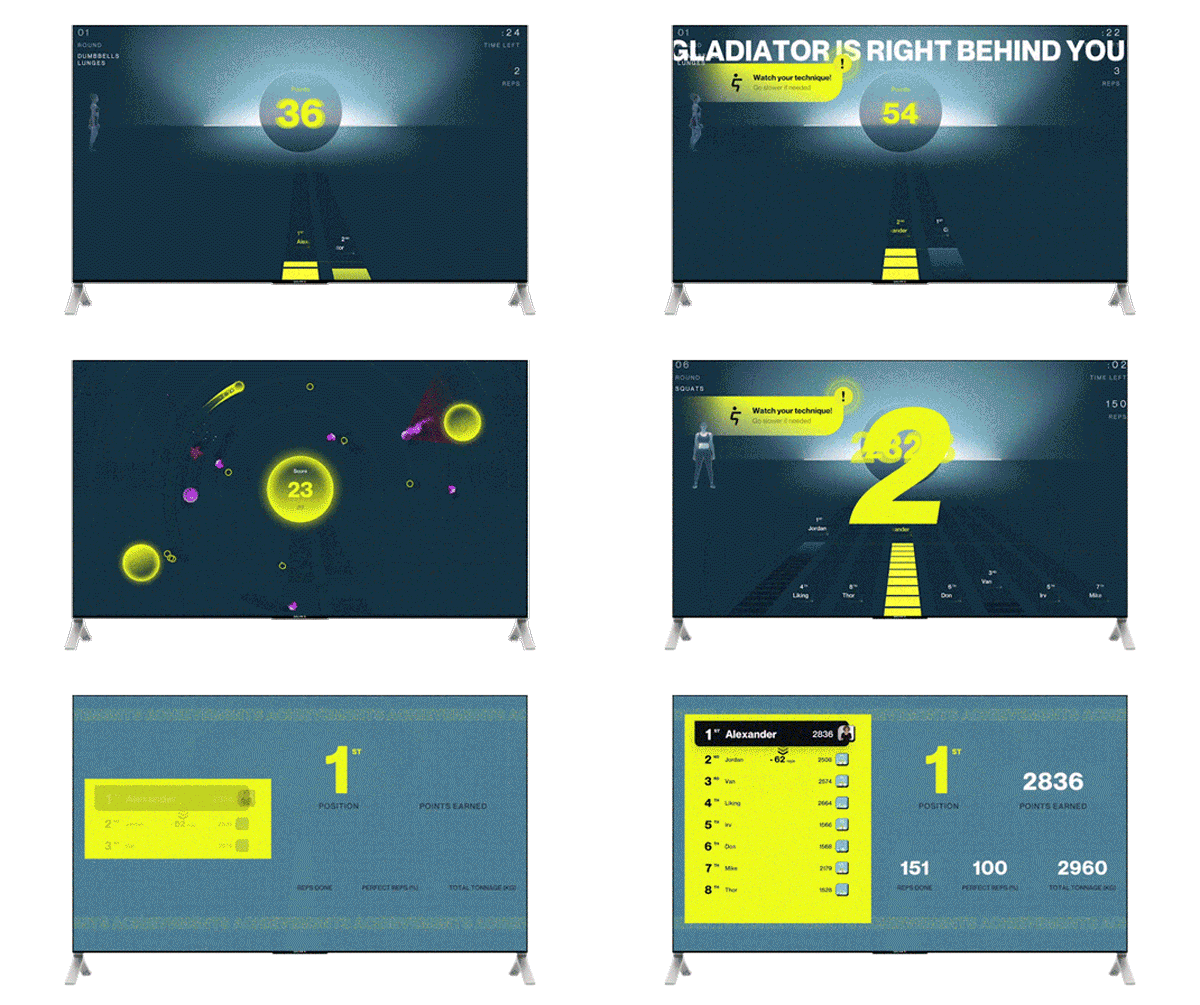


Dash:
Built movement-driven gameplay systems based on real-world motion input.
Tuned responsiveness to ensure physical movement felt immediate, precise, and intuitive in-game.
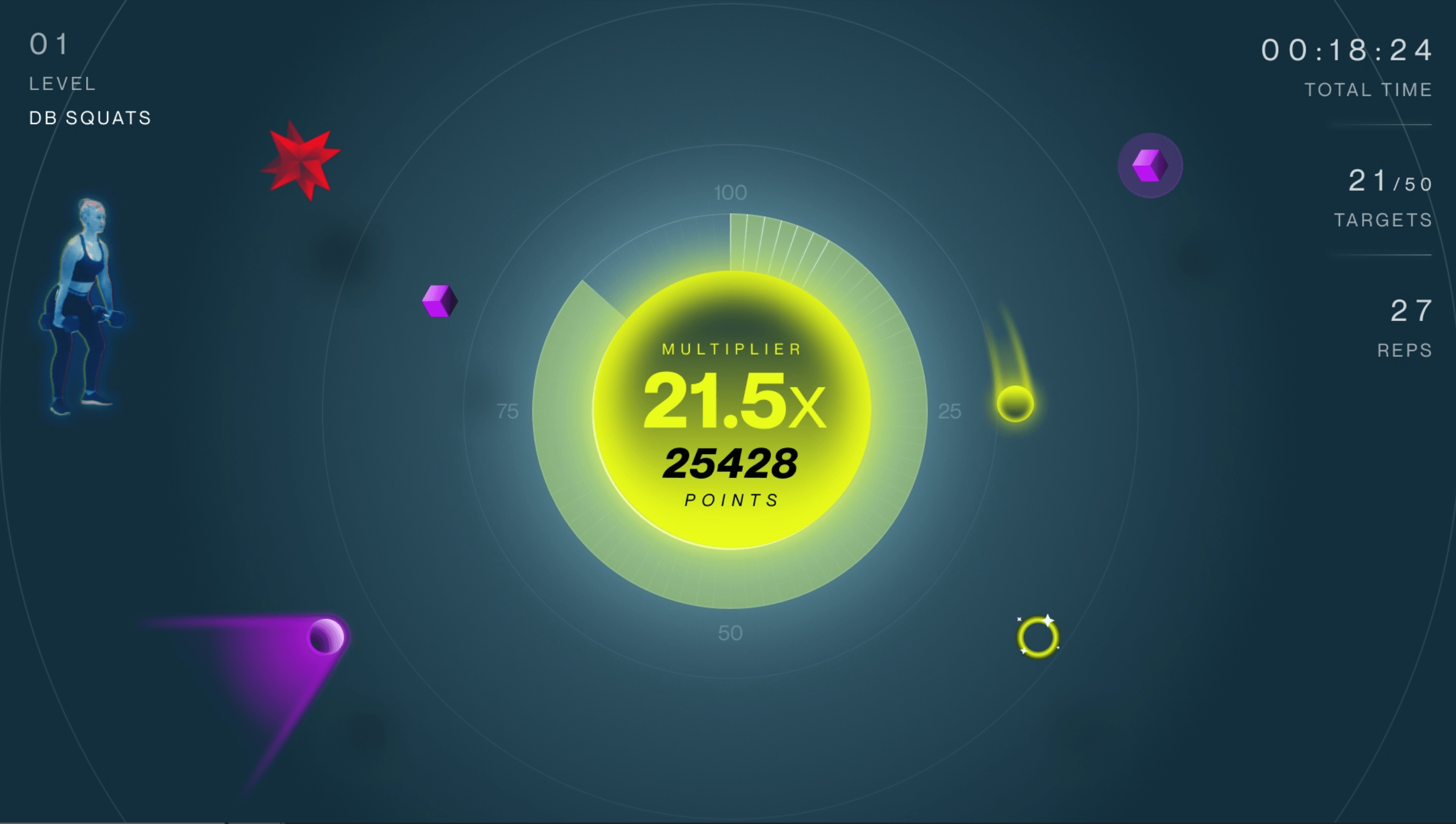
Orbitals:
Implemented circular and rotational gameplay mechanics driven by player motion.
Mapped real-world movement into controlled in-game trajectories.
Designed object spawning systems using a Poisson distribution approach to ensure:
• Even spacing between spawned objects
• No overlap or clustering
• Natural, readable distribution patterns during gameplay
This helped maintain clarity and fairness while keeping gameplay visually dynamic.
Across both modes:
• Developed core gameplay loops
• Implemented power-ups and ability systems
• Iterated heavily on responsiveness and gameplay feel under noisy real-world input conditions
Android–Unity Integration (Hybrid Architecture):
Built the bridge between native Android systems and Unity gameplay.
Consumed raw motion tracking data from a MediaPipe-based pipeline on the Android side.
Translated and normalized sensor data into Unity input systems for real-time gameplay control.
Ensured stable, low-latency communication between native and Unity layers within a production-grade hybrid mobile architecture.
AI Behavior & Responsiveness:
Developed AI behavior that adapts to player movement patterns.
Focused on making AI feel reactive and natural rather than deterministic or robotic.
Tuned systems to remain stable under real-world sensor noise and input inconsistency.
VFX & Gameplay Feedback Systems:
Built gameplay VFX and feedback systems in Unity.
Implemented camera feedback effects, environmental response systems, and mobile-optimized bloom and post-processing.
Focused on making physical movement feel visually impactful, responsive, and readable in real time gameplay.
Optimization:
Optimized Unity runtime for continuous sensor input streams.
Reduced overhead in event processing and cross-layer communication between native Android and Unity systems.
Ensured stable frame pacing within a hybrid native + Unity architecture.
Tuned visual effects and runtime systems to meet strict mobile performance constraints.
Architecture Patterns:
Used the Observer Pattern for decoupled gameplay event systems.
Implemented notification-based systems for communication between Unity and native Android layers.
Designed modular systems capable of handling rapidly evolving input formats and feature updates.
Outcome
Project Outcome & Industry Context:
The STÆDIUM Unity systems reached a production-ready state and were fully integrated into the final hybrid application. The systems I contributed were stable and required minimal changes after my departure.
The core technical systems — particularly the Unity integration layer and real-time motion-to-gameplay pipeline — were fully production-tested and successfully deployed within the application.
Project Direction & Market Impact:
During development, the connected fitness market changed significantly as COVID restrictions and consumer behavior shifted over time. As people moved away from lockdown conditions, demand for at-home connected fitness products declined rapidly across the industry.
Like many companies during this period, Freeletics had heavily invested in connected home fitness while demand was at its peak. However, the market appetite for connected equipment decreased faster than expected as consumers returned to outdoor activities and gyms.
As a result, STÆDIUM was eventually deprioritized while I was still at the company despite the technology itself reaching a strong production-ready state.
Key REsults
Real-Time Motion-Driven Gameplay Systems:
Built real-time Unity gameplay systems driven by external motion tracking data.
Gained deep experience working with hybrid native Android + Unity architecture.
Designed gameplay around noisy, real-world sensor input conditions.
Implemented probabilistic spawning systems using Poisson distribution principles to ensure balanced and natural object placement.
Worked in a tightly coordinated multi-team production environment.
Improved system design for low-latency cross-platform communication between native and Unity layers.
Tech Stack
Technical Skills:
• Unity
• C#
• Android Native Integration
• MediaPipe-based Motion Tracking Pipeline (native side)
• Observer Pattern
• Notification / Event Systems
• Hybrid App Architecture
• Mobile Optimization
• VFX / Post Processing (mobile-optimized)