
Stolpersteine NRW
Unity Developer, Flutter Developer
Android, IOS
~3
~6 Months
Stolpersteine NRW (RadiusMedia)
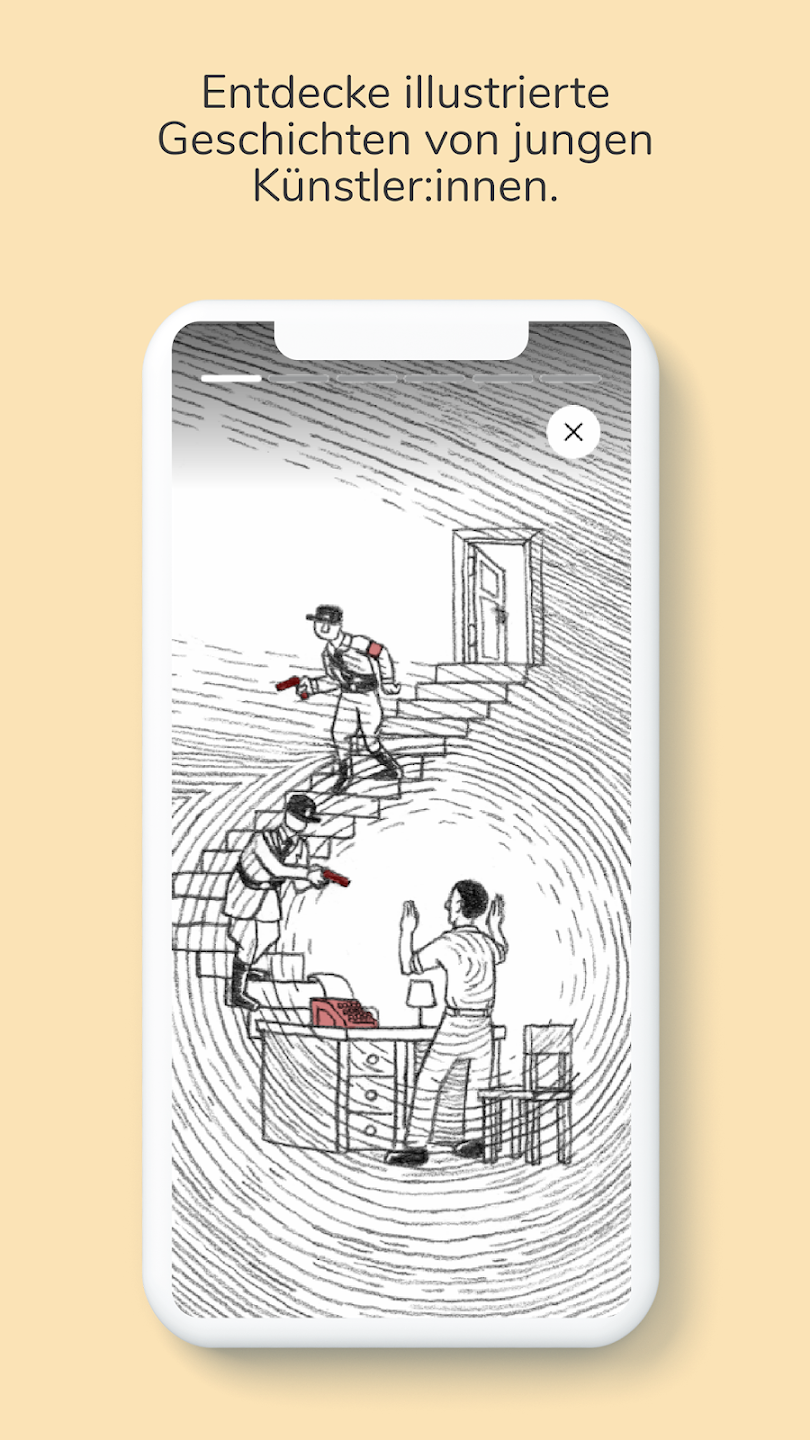
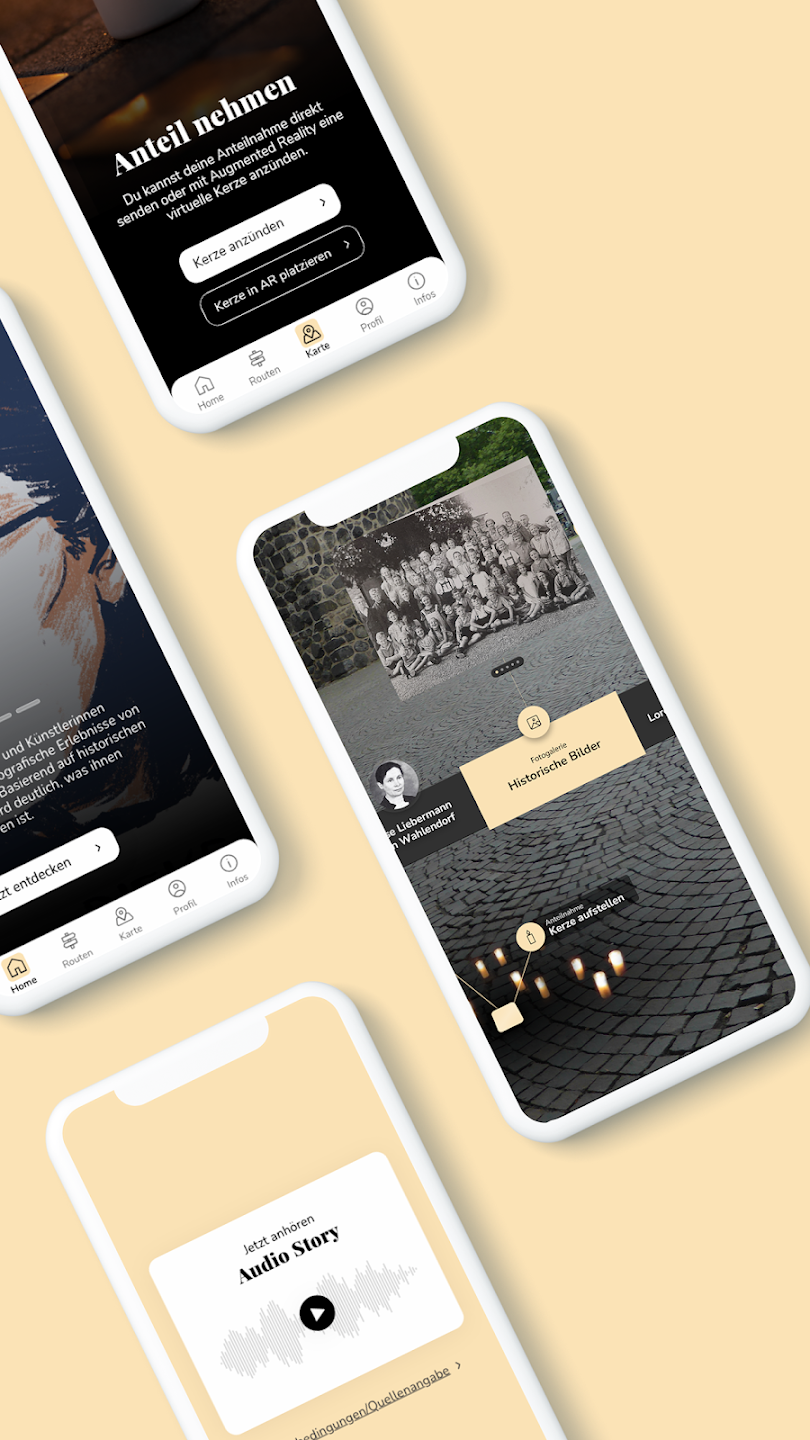
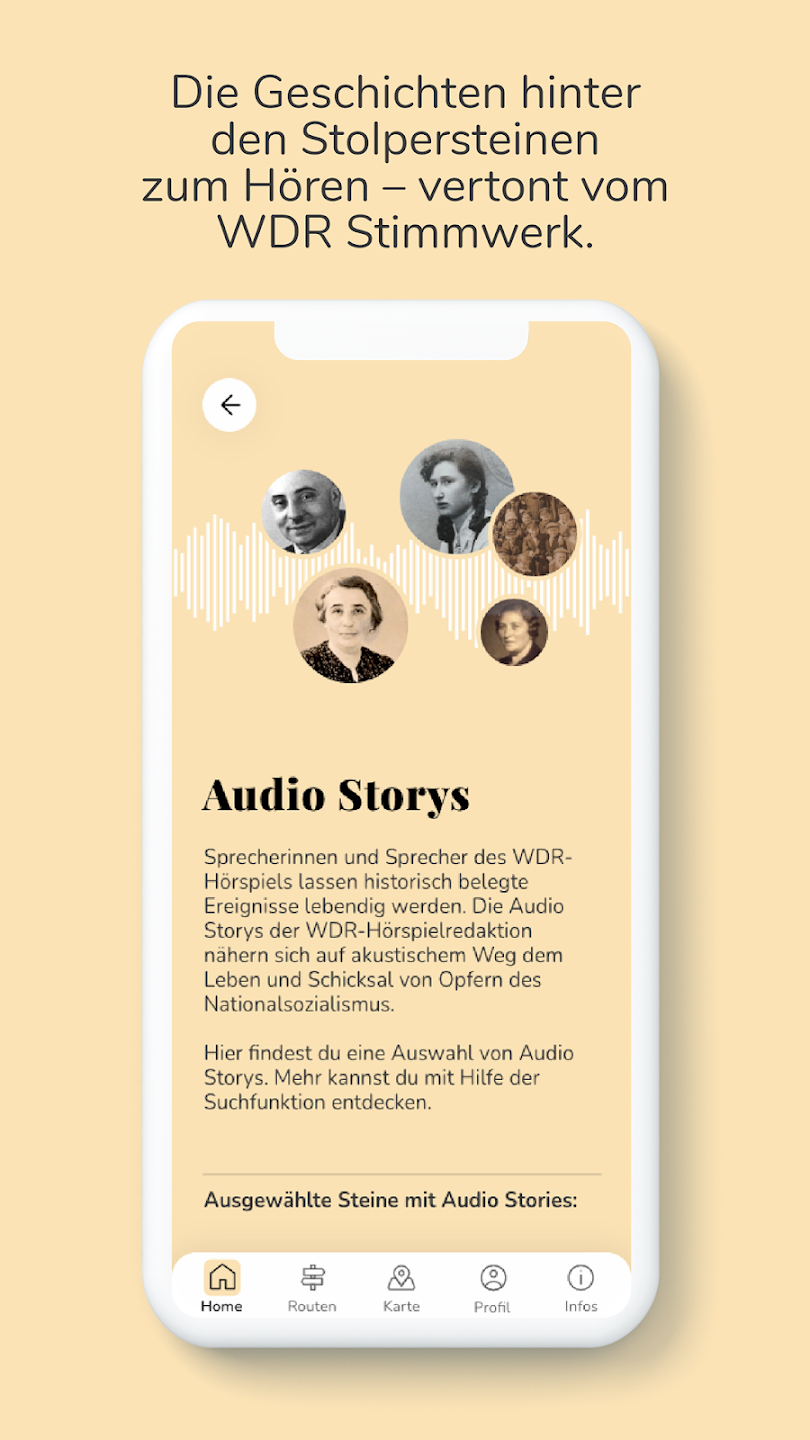
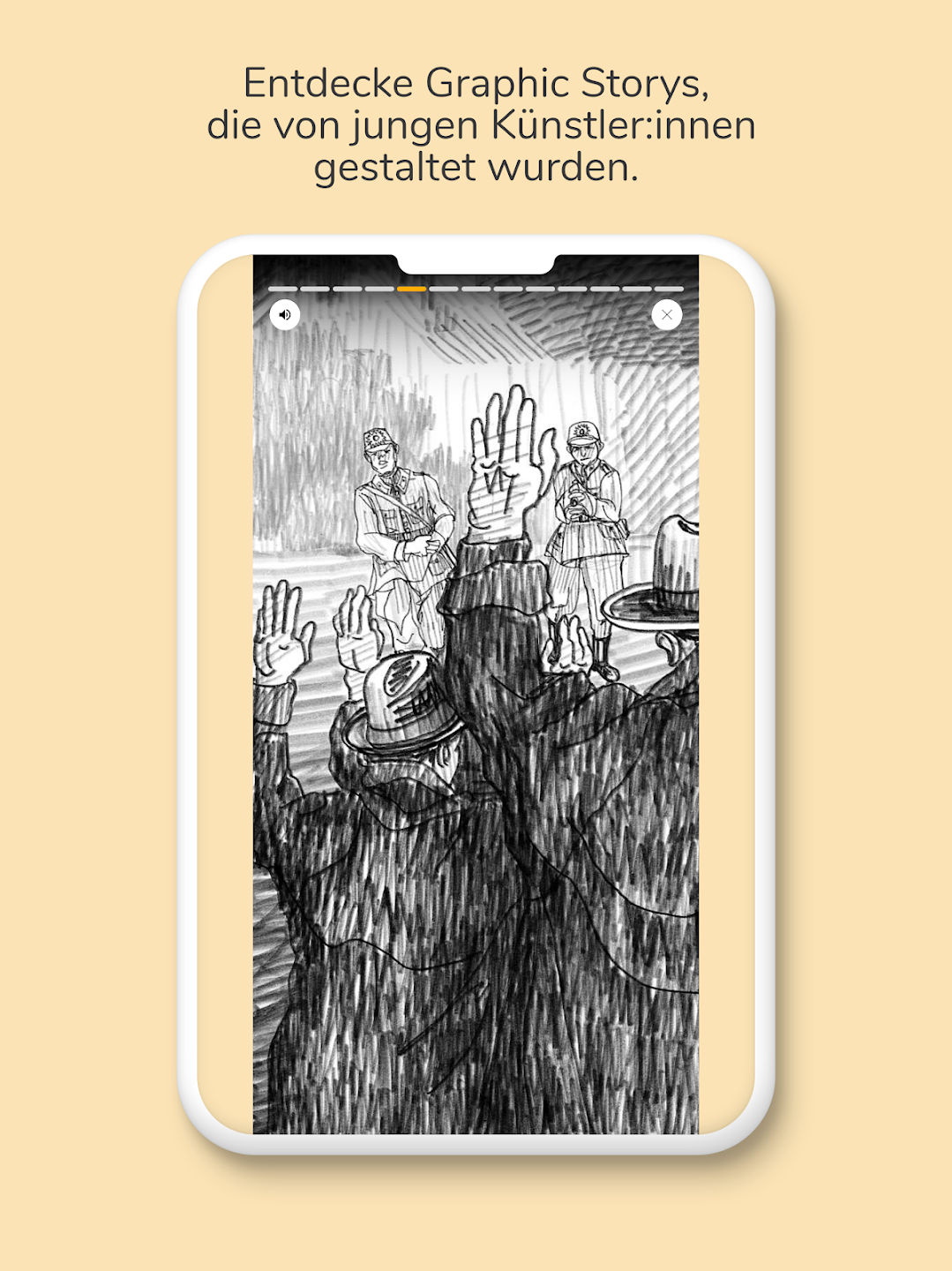
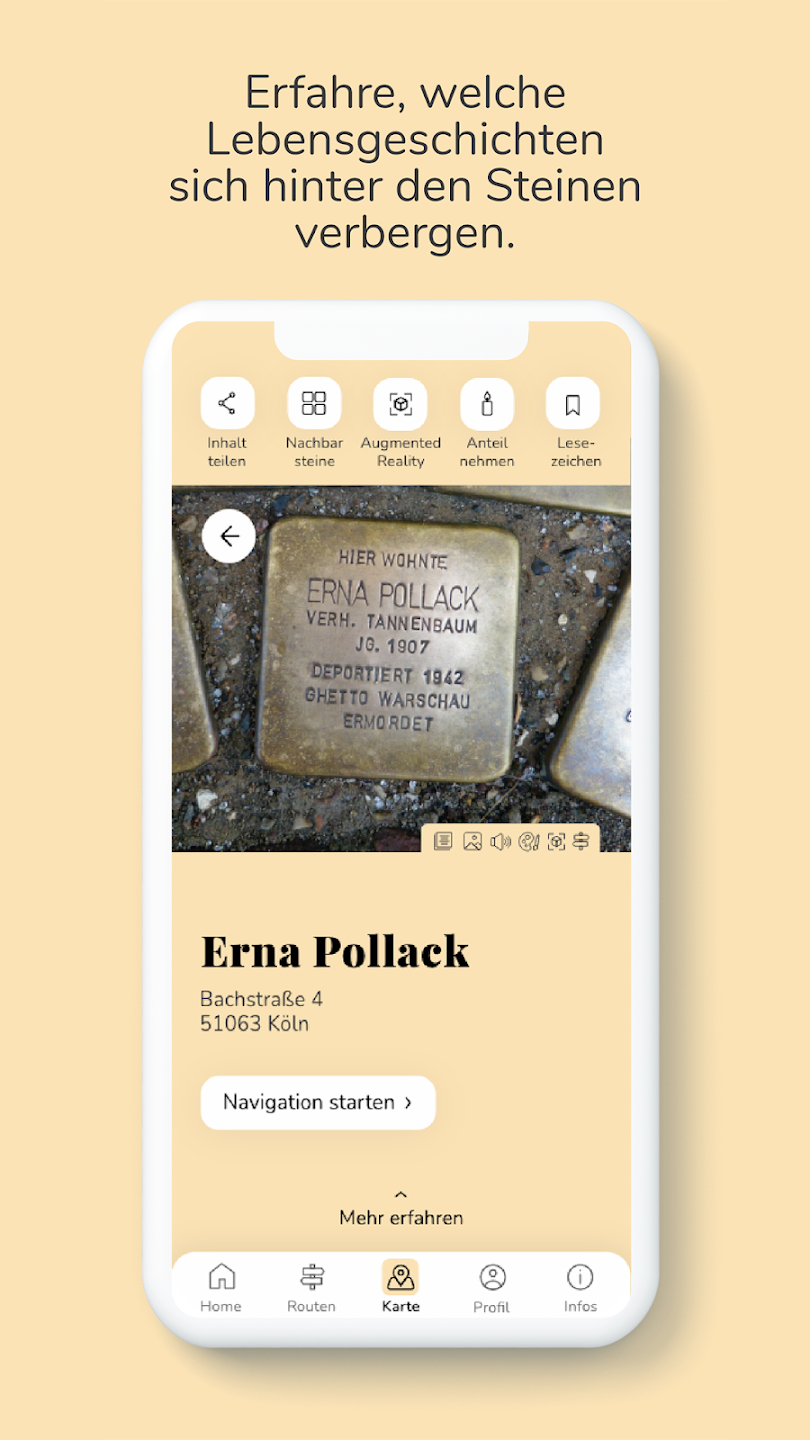
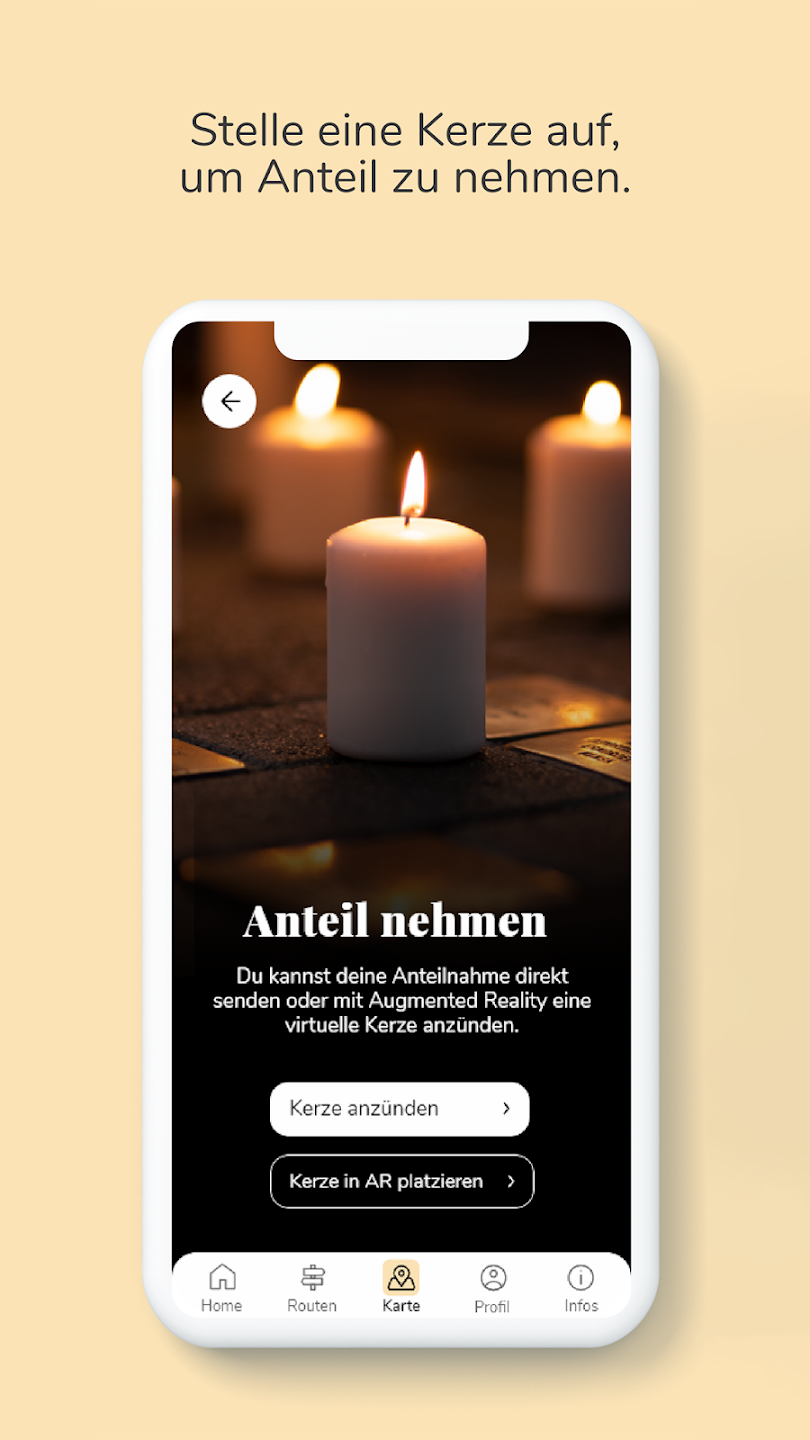
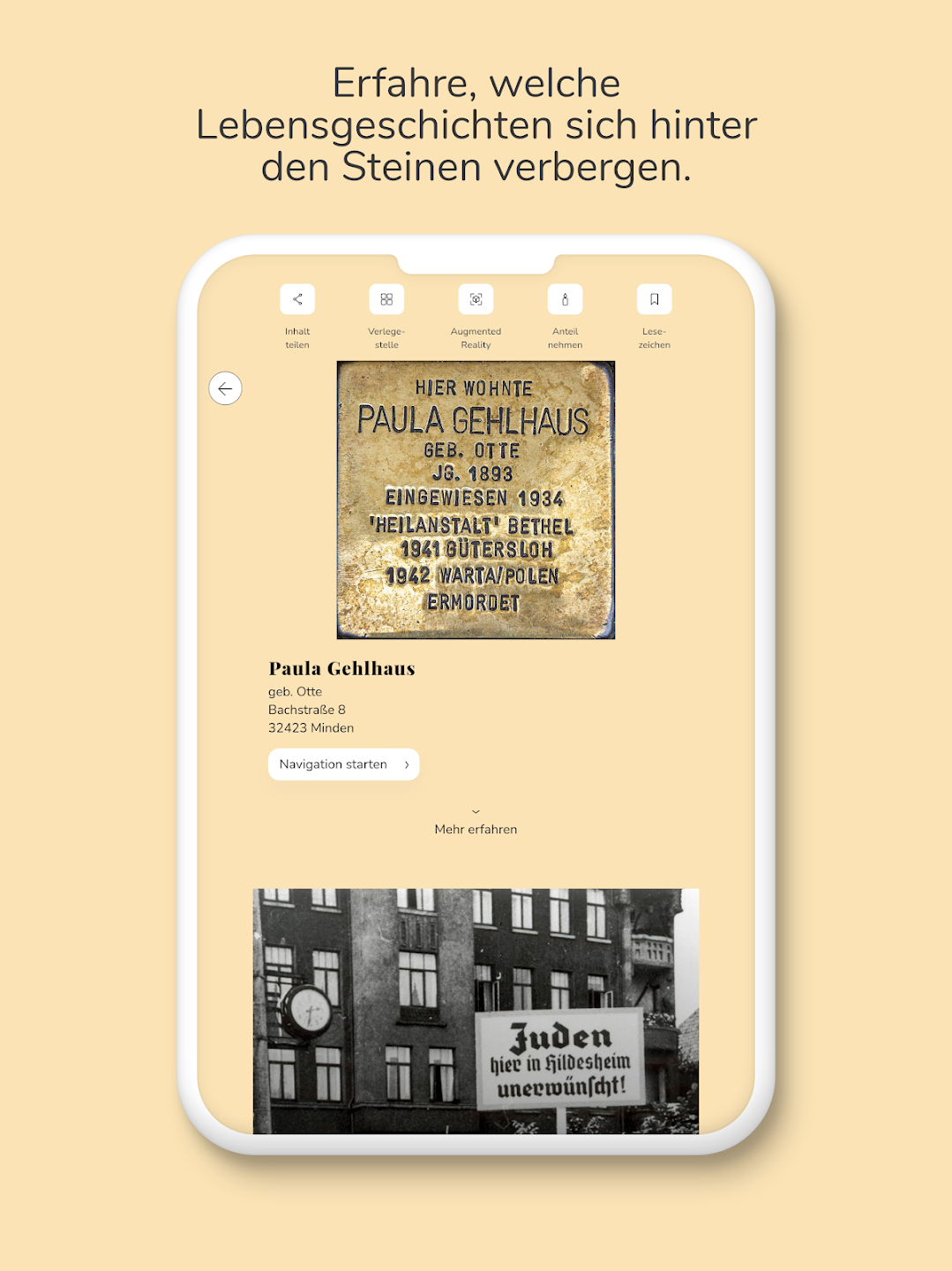
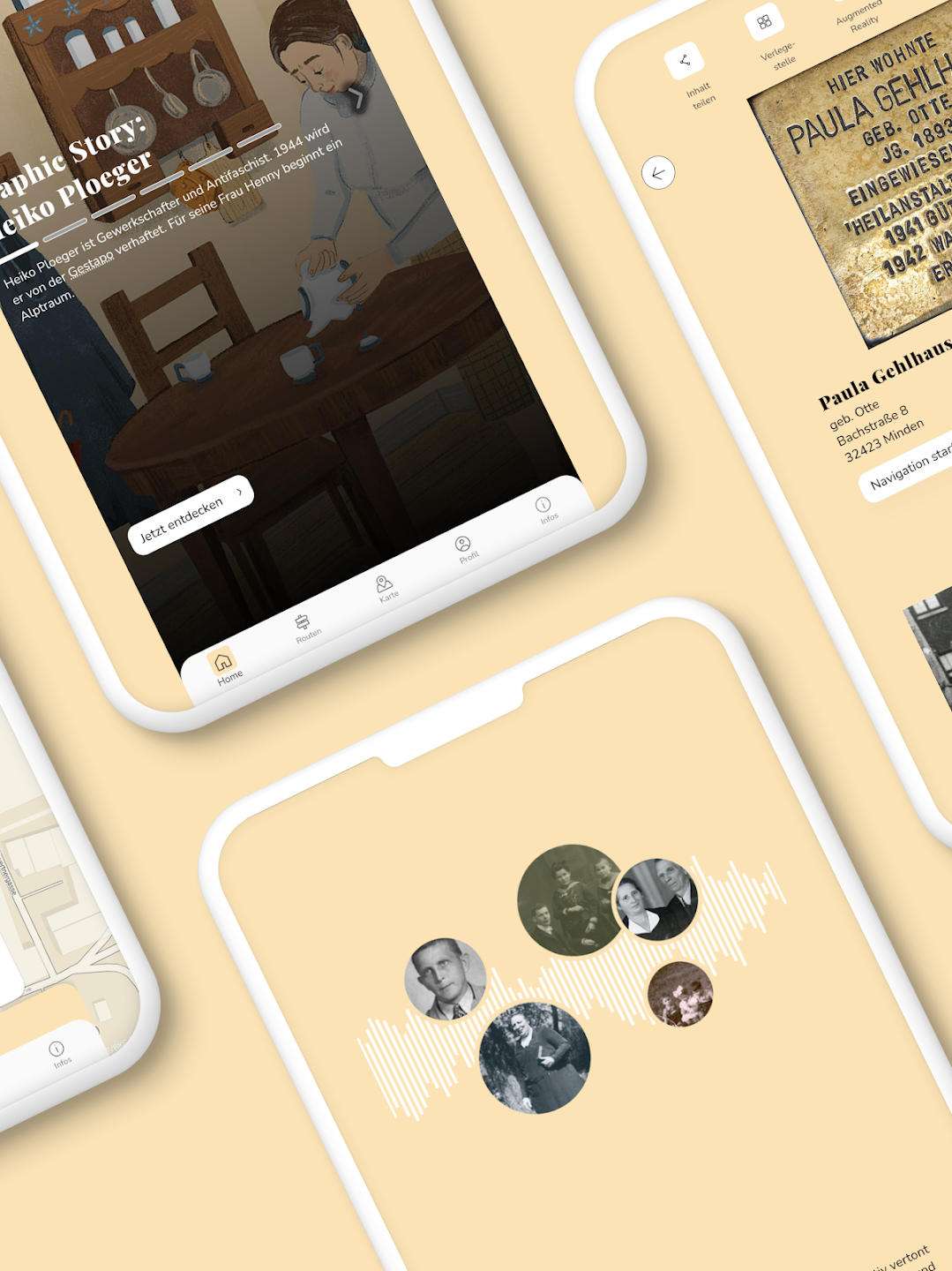
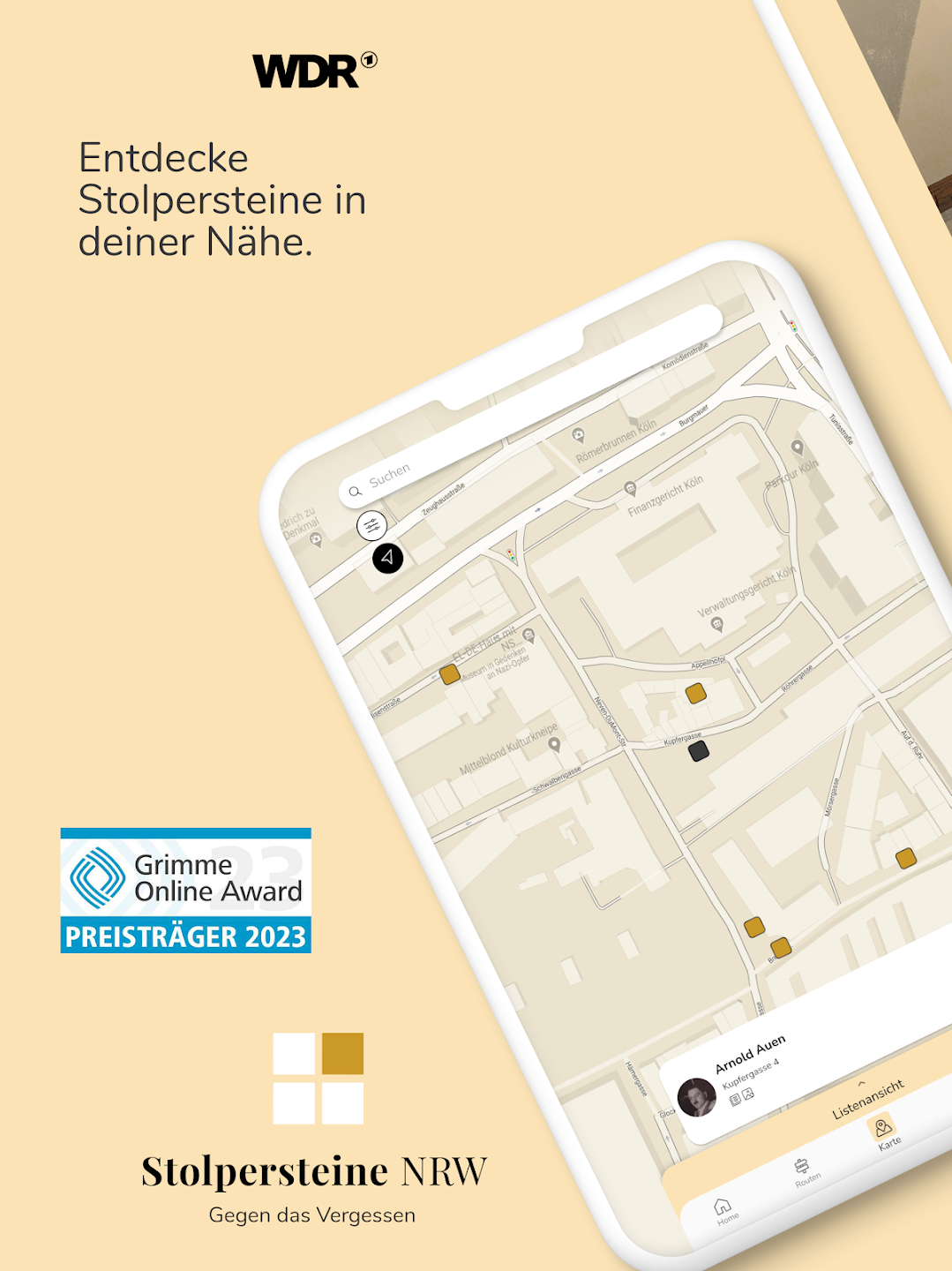
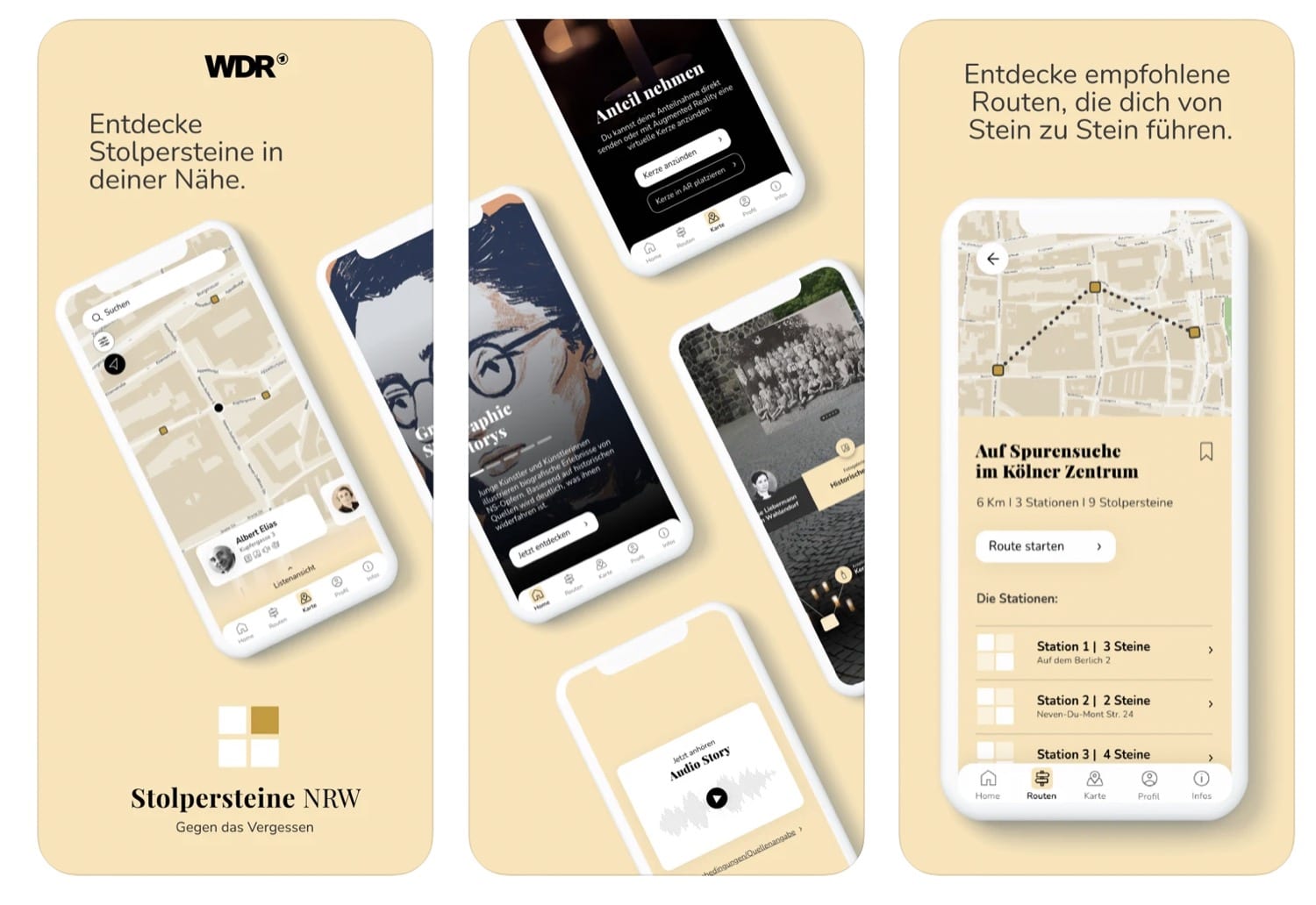
Stolpersteine NRW is an augmented reality mobile application developed for WDR and built by RadiusMedia. The app presents historical storytelling through location-based AR, allowing users to explore stories of victims of National Socialism through real-world Stolpersteine memorial locations.

Overview
Hybrid XR Architecture (Flutter + Unity):
This was a hybrid XR application combining:
• Flutter for UI, navigation, and mapping
• Unity for augmented reality experiences
The goal was to build a production-grade educational AR application with a clean, non-game-like UX while maintaining robust spatial AR functionality.
Technical Break Down
Contributions
Hybrid System Architecture & Implementation:
Designed and implemented a hybrid system where Flutter handled application structure and Unity handled AR runtime.
Built stable communication layers between Flutter and Unity for both Android and iOS.
Structured the application so Unity was fully isolated to AR functionality, while Flutter controlled all UI and navigation flow.
This separation improved:
• Application stability
• Startup performance
• UI responsiveness
• Maintainability across platforms
Flutter Architecture (MVC Design):
Implemented a Model–View–Controller (MVC) architecture within the Flutter application layer.
Separated system responsibilities into:
• Model: location data, AR content metadata, historical entries
• View: UI screens, map interface, navigation components
• Controller: logic for routing, data flow, and Unity communication
This structure helped maintain a clean and scalable architecture across a complex hybrid system where UI, mapping, and AR systems needed to remain decoupled.
Mapping & Unity Integration Challenges:
A key technical challenge was integrating reliable mapping with Unity.
Unity did not provide a native production-ready Google Maps integration, so Flutter was used for:
• Map rendering
• Location services
• UI-driven navigation
Unity was reserved strictly for:
• AR rendering
• Spatial content placement
• Interaction with real-world coordinates
This separation ensured better performance, cleaner system boundaries, and a more stable mobile experience.
AR Systems & Spatial Anchoring:
Built AR experiences using ARFoundation.
Implemented location-based AR content aligned with real-world coordinates.
Integrated spatial anchoring using Azure Spatial Anchors to maintain persistent placement in real environments.
Ensured AR content aligned accurately with physical Stolpersteine memorial locations.
System Optimization & UX Direction:
Reduced Unity’s footprint inside the application to keep it focused purely on AR functionality.
Ensured the Flutter UI remained clean, fast, and non-game-like to maintain a professional application feel.
Designed the overall experience to feel like a cultural and educational mobile application rather than a Unity
Key REsults
Key Learnings & Outcomes:
• Built a production-grade Flutter + Unity hybrid architecture
• Applied MVC architecture in a real-world mobile application
• Gained experience separating UI systems from XR rendering systems
• Worked with location-based AR and spatial anchoring systems
• Learned how to adapt Unity for non-game professional XR applications
• Improved cross-platform mobile architecture understanding (Android + iOS)
Tech Stack
Technical Skills:
• Unity
• C#
• Flutter
• ARFoundation
• Azure Spatial Anchors
• MVC Architecture Pattern
• Android / iOS
• Hybrid App Architecture (Flutter + Unity integration)